I must admit I am a fan of David L. Updike’s work. I was lucky to get the chance to critique his award winning story “The Feral Wives” in a workshop, and co-edited SHOCKING VERBS, LAWLESS NOUNS which included two of his very unsettling stories. For this reason, I did not recognize “Shake, Rattle and Roll” when it came across my desk.
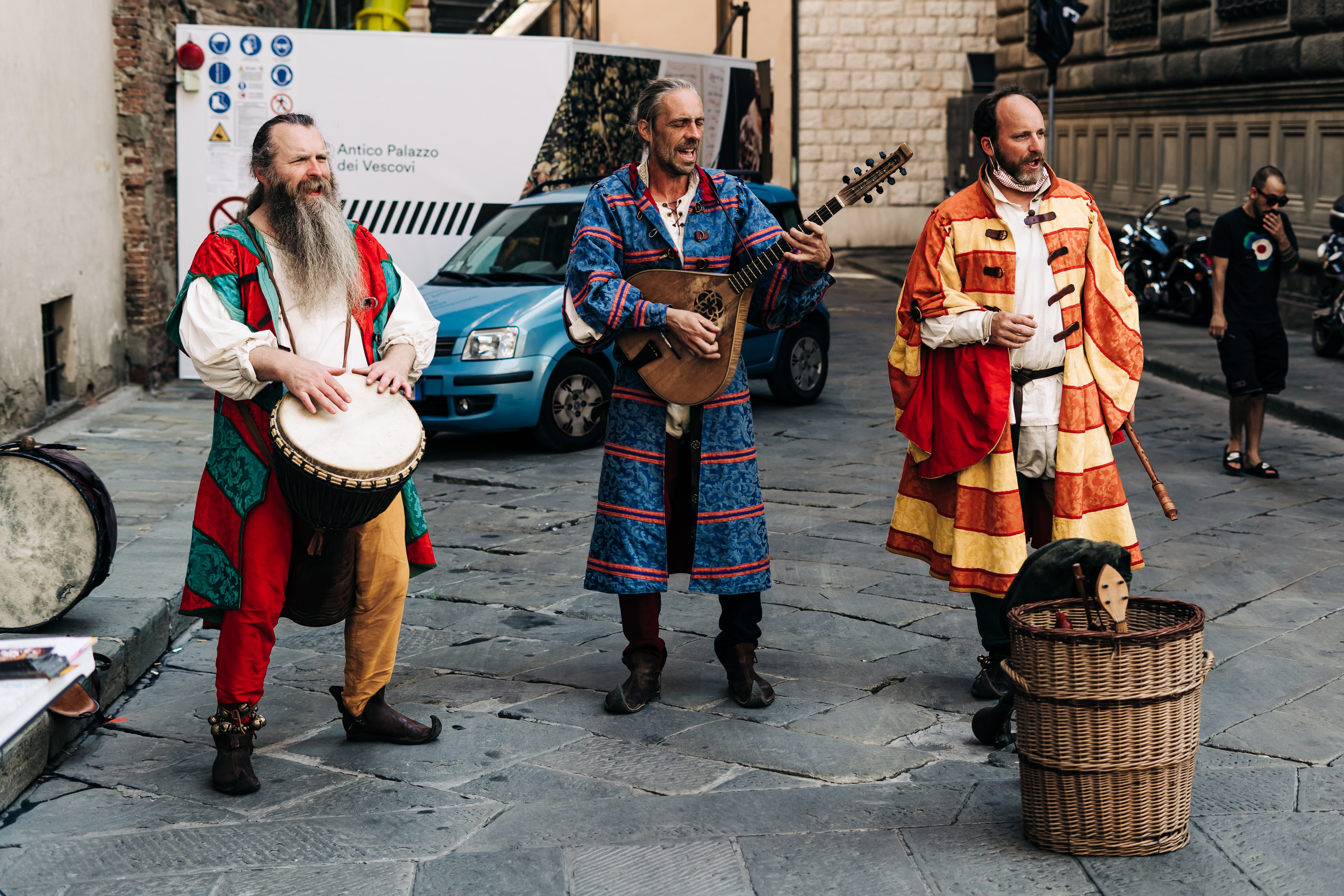
The dancing mania is serious business, seriously creepy and seriously tragic. But “Shake, Rattle and Roll” is fun as hell. Updike’s simple summary is “A young barmaid’s life takes an unexpected turn when four minstrels from the north show up in 1518 Strasbourg.” but the clever twists this story takes will have readers laughing out loud.
What made you decide to write a story for The Dancing Plague: A Collection of Utter Speculation?
I habitually scan the prompts for themed anthologies, but I haven’t had much success at writing to them. I also have never written anything I would call historical fiction. But this prompt was both very specific (Dancing Plague of 1518 Strasbourg) and wide open (the speculative part). It seemed like a space I could work in. I had fun exploring the topic, and once the premise hit me, the story took off under its own momentum.
How did you formulate your theory? How much did you rely on research?
My “theory,” in this case, is a bit of anachronistic absurdity that arose from a confluence of preoccupations. My daughter and I share a passion for the Beatles, and we were watching Peter Jackson’s three-part “Get Back” documentary series while I was formulating the story. On the research side, I relied on John Waller’s A Time to Dance, a Time to Die, which gathers pretty much everything we know about the actual events of 1518. I tried to follow the basic framework of the history in the arc of the story. So it’s a fantasy grounded in history. In musical terms, the history is backbeat and the rest is melody.
Do you think your speculation could be a feasible explanation for the plague or were you just telling a good story?
I was telling a story. The reader can decide if it’s a good one!
What are you reading right now?
I read a lot of short fiction because I write short fiction. In both cases, it’s partly because I stand a chance of finishing things. But I also love the compression of the form—how what lies just beyond the story is at least as important as what’s there on the page. Right now, I’m making my way through collections by Brian Evenson, Elizabeth Hand, Maria Haskins, and A.C. Wise. I’m also reading The Devil: Perceptions of Evil from Antiquity to Primitive Christianity by Jeffrey Burton Russell for another writing project.
What other projects are you working on? Where can we look for you next?
I’m in an online critique group with two other writers. We meet every three weeks, and our aim is for everyone to submit each time. The deadlines are a great motivator, and it really helps to have an immediate audience of trusted and perceptive writers. I find that our works feed each other in interesting ways, and there’s a bit of gentle competition in play as well. They’re both more savvy about submissions than I am, so it’s been inspiring to see how persistence and a thick skin pay off over time.
To read more of David L. Updike’s work look for his metaphysical detective story titled “The Unpleasantness at Cadbury Manor” coming out in JOURN-E: The Journal of Imaginative Literature in October. Past publications include stories or flash in Hobart, Philadelphia Stories, Daily Science Fiction, 365 Tomorrows, and Grimoire, among other places.
You can find links on his website www.thejackal.org and follow him on Twitter @davidupdike2


Leave a Reply